
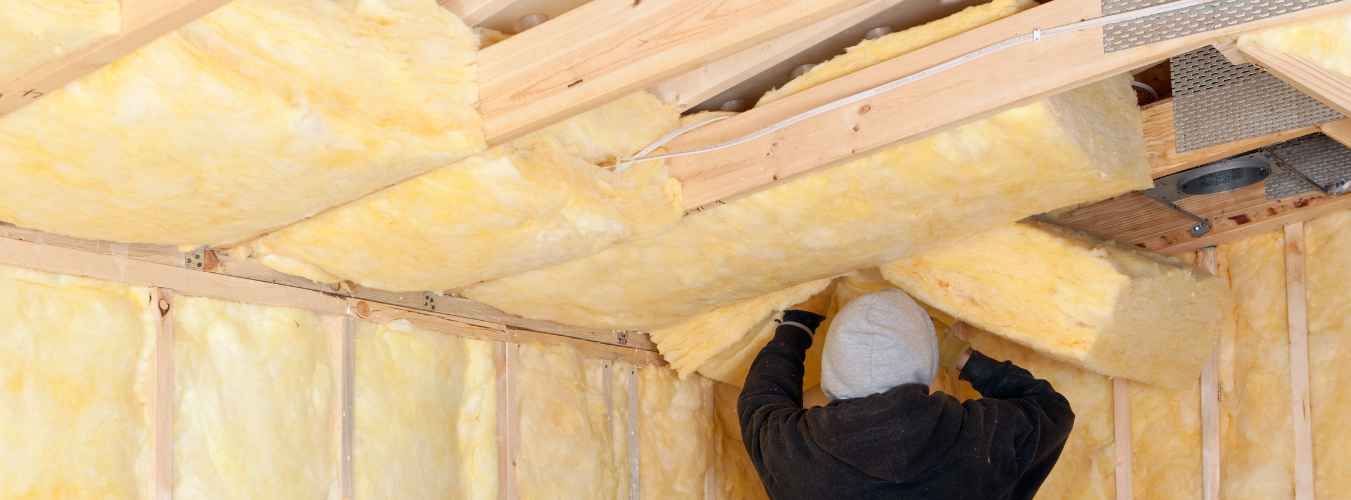
If your AC seems to be working overtime lately, your attic could be part of the reason. Poor attic insulation in South Florida can make your AC work harder, and a lot of homeowners only find out when the electric bill shows up.
The attic sits right above your living space. In summer it gets really hot up there, and if the insulation is thin or old, some of that heat ends up in your rooms. Then the AC has to run longer to keep up. Below is how that happens, what to look for, and what you can do about it.
How Attic Heat Gets Into Your Rooms
The sun hits your roof for hours every day. The roof gets hot, then the attic gets hotter, often well past 100 degrees in summer. Insulation is the main thing slowing that heat down before it reaches your ceiling. When there’s plenty of it, the heat moves slowly. When there’s not, it just walks right through.
Your AC has to deal with whatever gets in. So it runs longer to reach the temperature on your thermostat. Then there are the ducts. In a lot of homes they run through the attic, full of cool air, sitting in a very hot space. Some of that cooling gets lost on the way to the room. You paid to make that cold air, so it’s kind of a waste.
Signs Your Attic Insulation Isn't Doing Much
You don’t need to climb up there to notice something is off. A few things to watch for:
- Your AC runs almost nonstop in the afternoon
- Some rooms stay warmer than others
- Your bill went up and your habits didn’t change
- The ceiling feels warm to the touch
- You can see the tops of the floor joists in the attic
- The insulation looks flat, stained, or clumped up
Not all of these mean insulation trouble, to be fair. But if you have two or three, the attic is worth a look.
How Much Insulation Is Enough?
Insulation is rated by R-value. Bigger number, more resistance to heat. For attics in Broward County and the rest of South Florida, R-38 is a common target. That’s roughly a foot or more of blown-in material. The Department of Energy gives a wider range of R-30 to R-60 for Florida, so R-38 sits somewhere in the middle.
A lot of older homes have R-11 to R-19, or less. And insulation doesn’t last forever. It settles, it gets wet, it gets pushed around when someone fixes the AC or runs wiring. So even if your attic was done right once, it may not be right now. Here’s a rough guide.
| Attic Condition | Typical R-Value | What It Means for Your AC |
|---|---|---|
| Little or no insulation | R-0 to R-11 | Heavy heat gain, very high bills |
| Old or settled insulation | R-11 to R-19 | Longer run times, uneven rooms |
| Decent but thin | R-19 to R-30 | Some strain, room to improve |
| Recommended level | R-38 or higher | Steadier cooling, less strain |
What a Weak Attic Does to Your AC
The AC itself might be fine. It’s just doing too much work. That shows up in a few ways:
- Longer run times. It runs for hours to hit your set point.
- Higher bills. Cooling is a big chunk of most Florida power bills.
- Short cycling. Hot spots can make it turn on and off again and again.
- More wear. The compressor and fan motor put in extra hours every year.
- Sticky air. If it can’t cool well, it can’t pull out moisture well either.
Why Attic Insulation Goes Bad Here
Florida is hard on attics, honestly. The air is humid all year, and one small roof leak can soak the insulation. Wet insulation clumps and stops working. Mold can show up too. Attic insulation in Miami gets hit with this a lot, since the rain and humidity barely let up.
Pests cause trouble as well. Rats and squirrels nest in attics and tunnel through the material, and their waste ruins it. That’s a health issue on top of an energy one, and attic sanitizing is how that mess gets cleaned up. Then you have gaps around ducts, vents, and recessed lights that leak air. If it’s bad enough, adding more on top won’t fix it. You might need insulation replacement instead. And if you’re thinking of pulling the old stuff out yourself, read about removing it safely first. It’s messier than it looks.
Which Type Fits Your Attic?
It depends on the roof, the attic, and the budget. Blown-in tends to suit an open attic floor. Spray foam is more for sealing the whole attic or roof deck. Both are common for attic insulation in Fort Lauderdale and the nearby cities.
| Type | Best For | Good to Know |
|---|---|---|
| Blown-in | Open attic floors | Fast to install, fills gaps well |
| Spray foam | Sealing the attic or roof deck | Blocks air and moisture, costs more up front |
| Batt | Standard, easy-to-reach spaces | Needs a tight fit with no gaps |
| Radiant barrier | Reflecting roof heat | Works best with other insulation |
Air leaks matter as much as thickness, maybe more in some homes. Without air sealing, warm, humid air slips around the insulation anyway. A lot of homes do better if the leaks get sealed first and the insulation goes in after.
A Bit About Local Homes
Our home base is Hallandale Beach, and we work across Broward, Miami-Dade, and Palm Beach County. The heat is about the same everywhere. The houses aren’t. Older homes in Hollywood and Fort Lauderdale often have thin or tired insulation, and salt air and humidity don’t help. That’s why attic insulation in Hollywood, FL comes up so much.
Bigger homes in Boca Raton and West Palm Beach usually have longer duct runs through the attic. Long ducts in a hot space lose more cool air before it reaches the room. Miami homes deal with a lot of rain on top of the heat, so damp insulation is common. If you’re not sure we cover your city, check the areas we serve.
What You Can Do About It
- Compare your bills: This summer against last summer works fine.
- Get the attic checked: A pro can measure depth, find leaks, and spot damage.
- Fix leaks and pests first: New insulation won’t last on wet or dirty material.
- Seal, then insulate: Pick a type that fits your attic and budget.
- Look at the ducts: Dirty or leaky ones waste cooling too, and duct cleaning can help.
A Cooler House Starts Above the Ceiling
So, can poor attic insulation make your AC work harder? In South Florida, yes. The roof heat is strong here, and thin insulation can’t hold it back. The AC runs longer, and you pay more. Plenty of people put money into repairs or a new unit when the attic was the real problem.
It won’t fix everything, of course. A worn-out AC is still worn out. But thin insulation is one of the more common causes we run into, and one of the easier ones to fix. Take a look before you spend big.
Ready to Check Your Attic?
Not sure if your insulation is making your AC work harder? Attic Insulation Plus gives free on-site estimates across Broward, Miami-Dade, and Palm Beach County. We’ll check the depth, look for leaks, and explain your options in plain words. Call (954) 289-5522 or book a visit today.


