
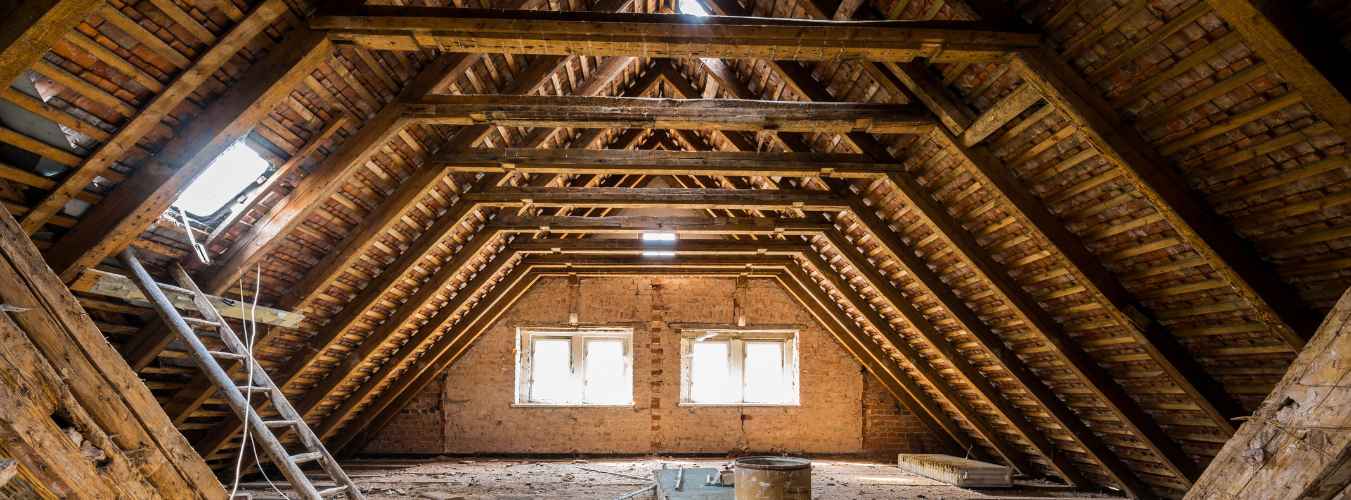
Most of us spend little time thinking about our attic, if any at all, until there seems to be a problem. A stained ceiling, skyrocketing AC bills with no apparent reason, or the telltale odor of a damp crawl space only appear after the fact. By the time we investigate the cause is often far from obvious.
The good news is that it is fixable, and rarely as bad as we imagine. Below we will go over why it happens, how to spot it, and what helps. Some you can check yourself, some will require a professional and we will try to mention the difference.
What Is Attic Condensation?
In short, condensation is water being forced out of air. Cool air holds less water than warm air, meaning when the two meet, the warm air will rapidly cool and, unable to hold onto all that water, produce condensation.
This tends to be on metal, things like AC ducts, or in an attic setting, a nail sticking out at the roof deck. This water then trickles down the cold metal or into the wood. If this process repeats every day with no opportunity to dry out, the result is referred to as attic moisture, attic sweating or humidity. These are all the same thing.
Why Broward County Attics Are So Wet
Warm, humid weather and a relentless AC schedule have a lot to answer for. Humidity in South Florida often hovers between 70-80% and summer is slow to yield. Couple that with the constant AC use and we have cold air flowing from ducts in an overly warm attic. Water will always look for a cool surface to cling to, and it is cold ducts that provide that.
Your location is a factor too. Sitting on the coast we have salty air, which adds to the overall measure of moisture. Insulation in older homes is poorer, and new homes are built tighter. Either way, moisture is likely to come in and struggle to get back out. On the odd cold morning in winter the underside of roof decks, usually metal ones, sweat too. Regardless of housing type, moist air is coming in and finding it has little opportunity to leave.
Common Causes of Attic Condensation
- Leaky ducts or those wrapped in insufficient insulation: The cooled air running through them lowers the temperature of the duct exterior. Warm, moist attic air meets this cold surface and water adheres to it.
- Poor or compromised insulation: Often there are spots where a section of housing is considerably cooler than the rest. It is these areas where water will gather.
- Infiltration of moist interior air: Warm, wet air from indoors will gather in the attic, especially around electrical points such as the attic hatch, recessed lighting, or where services such as electrical cables and pipework penetrate the ceiling.
- Fans exhausting into the attic: Steam from bath fans or dryers being vented into the space will add to the overall moisture content.
- Inadequate attic ventilation: Blocked soffit vents or an insufficient number of roof vents mean the humid air the attic generates has nowhere to go.
- An oversized AC: An AC that is too large for the space will rapidly cool it, power down and begin again. This means the cooled, but still humid air is not dehumidified and the ducts remain cold.
Signs of Attic Condensation
Some signs will be found in the attic, some in the rooms below.
- Water droplets forming on ducts, piping, or the roof deck itself
- Soft or stained areas on the woodwork
- Rust on nails or brackets
- Insulation that is damp, flat or clumpy
- A musty smell at the attic hatch
- Black or green staining, likely mold
- Brown, damp patches, likely on a ceiling below
- AC bills inexplicably rising
Condensation or Roof Leak?
Condensation and roof leaks are similar, but there are differences that can help tell them apart.
| Condensation | Roof leak |
|---|---|
| Spreads over a wide area | Localized to a specific place |
| Happens during humid weather | After or during heavy rain |
| Fine droplets, dampness, staining | Wet streaks, trails, and dripping |
| Often year-round | Mostly seasonal |
| Control air, moisture, and insulation | Repair the roof |
In some cases, both can be present, and care should be taken not to dismiss either. If in doubt a professional can usually tell the difference in one visit.
What Moisture Can Do to Your House
Wet wood loses integrity, becoming weaker and more prone to twisting and splitting. Left long enough and it rots. Mold also has the potential to take hold with potentially harmful consequences. Fiberglass insulation slows heat, but when wet it ceases to function correctly. This causes AC systems to work harder, using more energy and increasing bills.
Mold can often become airborne, especially in the case of a leaky duct. It is not enough to simply wipe the mold away. Thoroughly cleaning out mold spores, droppings and general mess is known as attic sanitizing and should be carried out before any insulation is replaced. Often soaked insulation has to come out, a process known as insulation removal, and ducts may need cleaning, air duct cleaning.
How It Shows Up Around Broward County
Each area has its idiosyncrasies. Sitting on the coast many older properties have poor level of insulation and worn, leaking ducts. This is a common recipe for attic insulation in Fort Lauderdale issues, and the solution will often revolve around the ducts and air leaks. A layer of extra insulation will not resolve these issues.
Hollywood is also full of older properties, and leaking ducts are a large reason for ducts sweating in this area. Attic insulation in Hollywood FL is rendered largely ineffective by persistent duct issues. Further inland, Pembroke Pines and Coral Springs have many homes built in the past few decades. These are well insulated properties with good internal temperatures, but the air entering the attic has nowhere to go.
Ways to Fix Attic Condensation
There is no one-size-fits-all solution. A younger, well-insulated home might only require more ventilation while an older home will benefit from duct repairs. Attic insulation in Pembroke Pines can vary considerably depending on the home in question and its relation to the coast.
- Sealing air leaks in the attic is an important first step. Blocking the flow of air into the space stops warm, moist air from following. This is known as air sealing.
- Addressing leaking or damaged ducts. Small holes can be filled with mastic while larger issues, or old ducts entirely, will require air duct replacement.
- Correcting, or replacing, insulation. The right depth with no gaps is ideal. Blown and batt insulation have similar effects when air leakage is controlled. Wet insulation is usually removed and replaced in a process known as insulation replacement.
- Consideration should be given to spray foam. Closed-cell foam applied to the roof deck will seal the space and prevent cool surfaces forming on the underside. It is more expensive but will stop moisture from forming. Open cell foam is an alternative.
- A radiant barrier should also be considered. Reflecting heat away from the attic will cool it considerably, though will not directly impact moisture.
- Address smaller issues, make sure bath and kitchen fans expel air externally, clear blocked soffit vents, and ensure the AC is correctly sized and drains as it should.
Can You Fix It Yourself?
Some things can be done by the homeowner. Making sure all fans expel air outside, checking soffit vents are not blocked, or sealing small gaps with caulk or foam are all reasonable DIY projects. These small steps will help reduce the overall effects.
The larger jobs are better left to the professionals. An attic can easily exceed 100 degrees in summer and it is surprisingly easy to break through a ceiling. Mold is also unhealthy to inhale, or get on your skin. We have more on removing attic insulation in South Florida and it is worth knowing exactly what you’re getting into.
Got a Sweating Attic in Broward? Here's Where to Start
Attic condensation is simply moist air finding a cold surface to cling to, and in South Florida this is not uncommon. Causes will vary between homes, though attic insulation in Coral Springs is no different to anywhere else in the county. Sealing air leaks, ensuring cold spots do not form, and opening up ventilation will help.
Start with the simple jobs. Investigate on a warm, humid day and try to record your findings. Make sure your fans and vents are all doing their job. If it seems like more than just a few damp spots a professional might be needed, as the cause is not always obvious. The earlier condensation is treated, the less rot and mold will develop.
Get Your Attic Checked
Uncertain as to what the issue is? Attic Insulation Plus offer free on-site estimates across Broward County. We can look at your insulation, ducts, and air leaks and advise on the cause and a suitable resolution. Call (954) 289-5522 or book online.


