
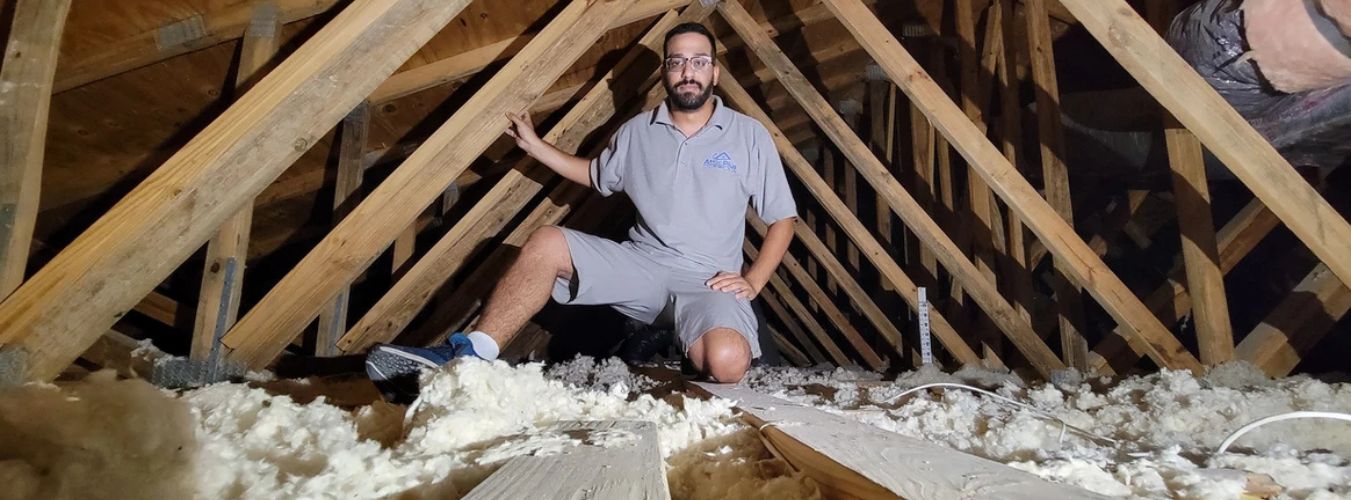
Ever climbed into your attic in July? Most people only do it once. The heat hits like a wall, the air feels thick and a little sour, and you start to wonder how your AC keeps up at all. Truth is, sometimes it doesn’t, at least not without running nonstop.
That’s usually when spray foam comes up. A neighbor mentions it, or a contractor does, and then you see the price. It’s a lot more than regular insulation. So is it worth it? For some Florida homes, yes. For others, not really. Here’s how we’d think it through.
Why Florida Attics Cause So Much Trouble
A lot of the insulation advice you’ll find online comes from places with snow. Those folks worry about heat getting out. We’ve got the opposite deal. Pop open an attic hatch around 3 in the afternoon in August and the heat just rolls out at you. A thermometer up there will often read 120 or more, and some days it’s 140 and change. It doesn’t stay up there, either. It soaks down through the ceiling, and you feel it in the room right under the roof. Ever notice one bedroom is always the warm one? Often, this is why.
Then there’s the damp. Florida air is heavy, and it finds its way into an attic through spots you’d never think about, like the gap around a light fixture or the little hole where a pipe goes through. When that air hits something cooler, water shows up. A few wet summers later the insulation looks flat and grayish, there’s a smell, and sometimes there’s mold too. Foam can cut down on both the heat and the leaks, so you’ll hear it recommended a lot.
What Spray Foam Actually Does
It goes on wet. A crew sprays two liquids that mix at the gun, and within seconds the stuff swells up and sets. Batts and blown-in just lie there. Foam grabs the wood and fills whatever spot it was sprayed into, and that’s a pretty big difference.
In a real attic, it means a few things:
- It fills tiny cracks and strange corners that batts skip right over
- It insulates and seals air in a single pass
- Sprayed on the roof deck, it can bring your ducts and air handler into a cooler space
- It stays put, so you don’t get slumping or settling over the years
- Closed cell holds up against moisture better than most other options
How Much Does Spray Foam Insulation Cost?
Let’s talk money, since that’s the real question. Plenty of South Florida contractors quote somewhere around $3,500 to $7,000 for a normal attic, and a big or awkward one can run past that. Open cell usually lands on the cheaper side. Closed cell costs more because it’s denser and takes more material.
Square footage doesn’t tell you much by itself, though. If old insulation has to come out first, that’s extra labor. A tiny attic hatch slows everyone down. A roof with lots of valleys takes longer to spray. So two quotes on the same house can sit thousands apart, and both can be honest. Check how thick the foam will be and what’s included before you look at the total.
| Attic Option | Typical Total Cost | What to Know |
|---|---|---|
| Blown-in insulation | Lowest upfront | Goes in fast, air sealing is a separate job |
| Open cell spray foam | About $3,500 to $5,000 | Seals air, cheaper than closed cell |
| Closed cell spray foam | About $4,500 to $7,000 | Higher R-value, better against moisture |
| Large or complex attic | $6,000 or more | Tight access, removal work, odd rooflines |
Treat these as ballpark numbers, not a quote. If you’re leaning toward the cheaper route, our post on blown-in attic insulation cost in South Florida covers that side.
Open Cell vs. Closed Cell Spray Foam
These two get mixed up constantly. Both seal air. They behave differently after that.
| Feature | Open Cell | Closed Cell |
|---|---|---|
| Cost | Lower | Higher |
| R-value per inch | About 3.5 | About 6 to 7 |
| Moisture resistance | Lower | Higher |
| Sound dampening | Very good | Good |
| Thickness needed | More | Less |
Down here, closed cell gets picked a lot because of the humidity. Open cell can work fine too, as long as the attic was designed for it and the house itself stays dry. And if your rafters are shallow, closed cell gives you more R-value per inch, so a thinner layer does the job.
When Spray Foam Is Usually Worth It
It tends to pay off in a handful of situations. If your house shows up on this list, take it seriously.
- Your AC unit or ductwork lives in the attic
- The upstairs runs hotter than the rest of the house
- The attic feels damp or smells musty
- You’re staying in the home ten years or longer
- A new roof is coming, or old insulation has to go anyway
- Rafters are shallow and you need high R-value in a thin layer
Ducts are the big one in our book. In many Florida homes they run through the hottest spot in the whole house. Pull them inside the insulated space and the AC doesn’t fight so hard. Will you save a set percent? Nobody can say for sure, and be careful with anyone who does. It comes down to your ducts, your roof, and how leaky the place is right now.
When It May Not Be Worth the Money
Now the other side. Say your ducts already run through the living space and the attic floor just needs more depth. Blown-in plus some air sealing might get you most of the way for a lot less. Same if you’re selling soon. A couple of years probably won’t earn back the extra cost.
Also, foam won’t fix a leaky roof, bad ductwork, or an AC that’s on its last legs. Deal with those first. It also makes later changes harder, since pushing new wiring through hardened foam is a pain compared to fiberglass. And one more thing, because this one matters: don’t buy it as hurricane protection. It isn’t a guarantee. Sometimes plain air sealing fixes more than you’d expect, for much less.
Spray Foam vs. Other Attic Options
Both can work in Florida. They just solve different problems.
| Question | Spray Foam | Blown-In |
|---|---|---|
| Upfront cost | Higher | Lower |
| Seals air leaks | Yes | No, needs separate sealing |
| Humid air in the attic | Helps keep it out | Can soak it up |
| Future wiring or repairs | Harder | Easier |
| Taking it out later | Difficult | Easy |
Some homeowners add a radiant barrier as a middle step. And if your old insulation is wet, flat, or full of pests, you’ll want insulation removal before anything new goes in. Foam needs a clean, dry surface to grab onto.
Questions to Ask Before You Sign
Spray foam is only as good as the crew spraying it. Once it’s on the roof deck, it’s hard to undo. So ask a few things up front.
- Which foam type, and how thick, in writing
- Will the attic be vented or unvented afterward
- Is old insulation removal and cleanup in the price
- Who’s doing the spraying, and are they trained and insured
- What does the warranty actually cover
- How long until you can be back in the house
What We'd Do If It Were Our Own Attic
If the AC and ducts sit up in the attic, the upstairs runs hot, and you’re staying put for a good while, we’d lean toward spray foam. You get insulation, air sealing, and a cooler spot for your equipment in one job. Over the years that tends to add up.
But if your attic’s in decent shape and just needs a thicker layer, blown-in with air sealing is a smart buy too. There’s no wrong answer here. It’s about your house, your budget, and how long you’ll live in it. Get two or three quotes and read them line by line.
Not sure which option fits your attic?
Call Attic Insulation Plus at (754) 325-1750 or book a visit. We’ll walk through your attic, explain the options in simple terms, and give you an itemized price you can compare with other quotes.


