
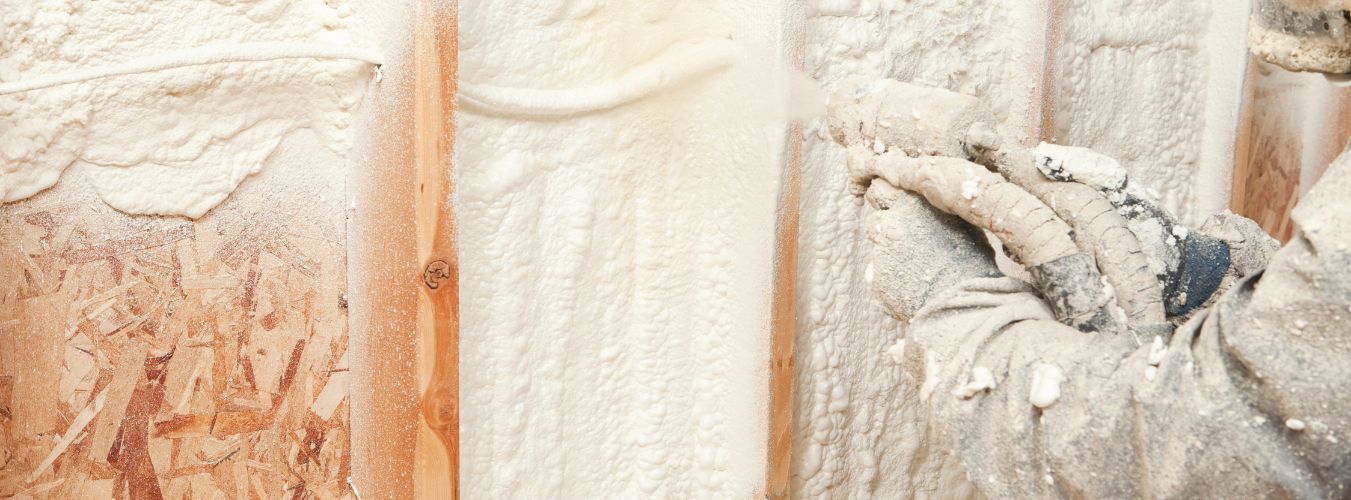
Search for spray foam insulation Miami and you get a long list of companies, all promising about the same thing. Quick turnaround, low price, lots of experience. A website can say whatever it wants, so it’s hard to tell who really means it.
Spray foam bonds to the wood and roof deck it’s sprayed on. If it goes on badly, getting it off means scraping by hand, and that’s slow, messy work. So the foam is only half of the decision. The other half is the person holding the gun.
Why the Crew Matters More Than the Foam
Spray foam comes from only a few big manufacturers, so the drum on one truck is often the same as the drum on another. The difference is the people. Foam has two parts that mix right at the gun, and the temperature and ratio need to be close to spot on. It also goes on in layers. Rush a layer or spray it too thick and it can shrink, crack, or stay gummy.
Florida makes all this harder. Our air is wet nearly all year, the sun beats on roofs for hours, and then there’s hurricane season. A crew that learned the trade somewhere cold and dry might not think about moisture the way a local one does. So ask how many attics they’ve sprayed in Miami-Dade specifically. You’ll learn a lot from how fast they answer.
Check the License and Insurance First
Nobody enjoys this part. Still, a quick lookup can save you a lot of trouble, so do it before anything else. A contractor in Hialeah, Kendall, or any other part of the county shouldn’t mind you asking.
- A license number you can look up on the Florida DBPR website
- Proof of general liability insurance
- Proof of workers’ compensation coverage
- A real local address and phone number
- Training from the foam manufacturer, if they have any
- Bonding (nice to have, not always required)
Look for Experience With Florida Homes
Plenty of companies say they’ve been around for decades, and that alone doesn’t tell you much. Some are old and still sloppy. Houses and attics differ a lot, so find out which kinds a crew sprays most often. One that works around Coral Gables every week has probably met most of the odd roof shapes already. Ask to see pictures of finished attics, and make sure they’re real ones.
Reviews are worth reading, but the star count isn’t the useful part. Look for the small details. Did the crew show up when they said? Was the attic left clean? Did anyone answer the phone a month later? Those things say more than a perfect five stars. If you can, get a couple of past customer names and call them, ideally people who live close by.
Open Cell vs Closed Cell Spray Foam
Open cell and closed cell do different jobs, and a contractor should be able to say which one your attic needs and why. If the answer is the same for every house, that’s a hint. Here’s a quick side by side.
| Feature | Open Cell | Closed Cell |
|---|---|---|
| Feel when cured | Soft and spongy | Hard and dense |
| R-value per inch | About 3.5 to 3.7 | About 6 to 7 |
| Moisture resistance | Lower | Higher |
| Air sealing | Very good | Excellent |
| Cost | Usually lower | Usually higher |
| Where it's often used | Roof decks, interior walls | Garages, damp areas, tight spaces |
Neither one is better in every case. Open cell is cheaper and seals well. Closed cell is tougher against moisture, though it adds quite a bit to the spray foam cost per inch. Both kinds of spray foam insulation show up in Florida attics, so the choice usually comes down to the roof, the budget, and how much moisture is around.
Questions to Ask Before You Sign
Write these down and ask each company the same set. You’ll start to notice who is patient and who is annoyed.
- Which type of foam do you recommend, and why?
- What R-value are you aiming for?
- Will you check the roof for leaks first?
- How do you handle ventilation while you work?
- How long until we can go back inside?
- Is there a written warranty?
- Who does the cleanup?
- Can I see a sample quote with each cost listed?
A contractor who gets touchy over basic questions is showing you how the rest of the job will go.
Get Three Itemized Quotes
Three written quotes is a good number. Put them next to each other. A solid quote names the foam type, the thickness, the square footage, the spots being sprayed, and the final price. If a line is missing, ask. A quote with gaps tends to turn into an argument down the road. This goes for Homestead just as much as Miami or Doral.
A price that sits far below the others is worth a second look. Sometimes the layer is thinner, or the prep work was left out. Cheapest on paper isn’t always cheapest in the end. And if your attic already has old or damaged material, find out whether the company also does insulation removal, since it saves you from hiring someone else.
Good Signs and Red Flags
| Good Signs | Red Flags |
|---|---|
| Shows license and insurance right away | Gets vague about papers |
| Looks at your attic before giving a price | Quotes a price over the phone |
| Explains both foam types clearly | Pushes one product for every house |
| Gives a written, itemized estimate | Gives one number with no details |
| Lets you take your time | Says the price is only good today |
| Talks about moisture and air leaks | Only talks about R-value |
| Offers a written warranty | Offers a verbal promise only |
What to Know About Miami-Dade Homes
This county is huge, and houses change a lot from one city to the next. Older block homes in Hialeah often have thin or worn insulation, which can mean removing old material first. Doral has plenty of newer homes built pretty tight, so ventilation and indoor air need extra thought. Pinecrest tends to have bigger houses with large attics. More foam means a bigger bill, so quotes there can vary quite a bit.
Storms are the other factor, especially in Homestead and the south end. Roofs take a beating down there. Foam sprayed under the roof deck can hide a slow leak, so the roof needs a look before spraying begins. Some shingle warranties also have rules about sealed attics, so read yours. For some attics a radiant barrier is worth considering too, and a good contractor will talk it through instead of pushing one product.
| Area | Common Conditions | Good Question to Ask |
|---|---|---|
| Miami | Older homes, condos, high humidity | How do you handle moisture? |
| Hialeah | Older block homes, worn insulation | What has to come out first? |
| Doral | Newer, tightly built homes | How will the attic be ventilated? |
| Coral Gables | Older homes, complex roofs | Will you inspect the roof first? |
| Homestead | Storm exposure | What shape is my roof in? |
| Pinecrest | Larger homes and attics | What's the cost per square foot? |
Before and After the Job
Find out what the crew does before they spray. Good ones cover the floors, protect the vents, and seal off the work area. The attic should be clean too. Spraying over rodent droppings is a bad idea, so attic sanitizing comes first when that’s a problem.
Once they finish, take a slow walk through the attic and the house. Here’s what to look for:
- Foam that looks even, with no big gaps or bare patches
- No strong chemical smell after the wait time you were given
- A clean work area
- Your warranty and paperwork in writing
- A slightly cooler upstairs over the next few weeks
Spot something off? Say so right away, and a decent contractor will come back and fix it. Once it’s all signed off, the insulation lifespan depends mostly on the material and on whether moisture ever gets into the attic.
Take Your Time and Pick Someone You'd Call Again
Choosing a spray foam contractor in Miami-Dade doesn’t have to be a headache. Check the license and insurance first. Look at their Florida experience. Learn the difference between open cell and closed cell. Get three written quotes, and be wary of anyone who rushes you. Do just that much and you’ll avoid most of the bad jobs.
The foam stays in your home for years, so a week or two of homework is fine. A good contractor answers your questions without making you feel silly. If something about a company feels wrong, even if you can’t say why, trust it and call the next name on your list.
Get a Free Spray Foam Estimate
Attic Insulation Plus offers free on-site estimates across Miami-Dade County. We look at your attic, talk through open cell and closed cell options, and send an itemized price with no hidden fees. Call (954) 289-5522 or book a visit online whenever it suits you.


