
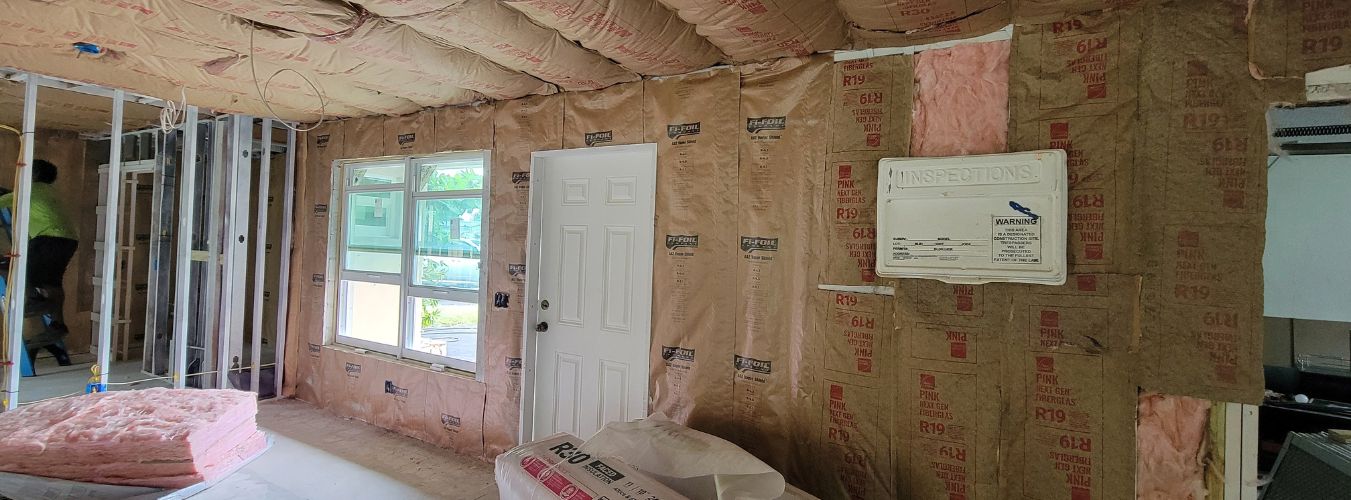
Climb into almost any attic in South Florida and you’ll probably find a fiberglass insulation mistake or two. Nothing crazy. Maybe a batt folded over a pipe or insulation pushed up against the soffit so the vent is buried. From the hatch you’d never know but your AC sure does.
Most of this stuff can be fixed in an afternoon with a flashlight and a ruler. It’s still worth getting right since the heat and humidity in Broward, Miami-Dade and Palm Beach are a lot harder on an install than a mild climate would be. Below are the mistakes we run into the most and how to deal with each one.
What Goes Wrong With Fiberglass Insulation
It’s easy to assume the glass itself does the insulating. What really slows heat is the air trapped between the fibers so a batt that’s been squashed, soaked or torn open loses a lot of its punch and the R-value (that’s the rating printed on the package) falls along with it.
On top of that fiberglass doesn’t stop air from moving through it. Attics here can get past 120 degrees in summer so even one gap near a light fixture lets a surprising amount of heat drop onto your ceiling. A thick layer with holes in it can end up worse than a layer that actually fits, which is why the install matters nearly as much as the product.
Fiberglass Insulation Mistakes at a Glance
| Mistake | What It Causes | Fix |
|---|---|---|
| No air sealing | Hot air leaks into the house | Seal gaps with caulk or foam before insulating |
| Compressed batts | Lower R-value | Replace flattened batts with the right size |
| Gaps and voids | Hot and cold spots | Fill with cut scraps or loose fill |
| Blocked soffit vents | Trapped heat and moisture | Install vent baffles |
| Faced batts stacked together | Moisture stuck between layers | Use unfaced batts for added layers |
| Not enough depth | Higher energy bills | Add insulation up to your target R-value |
| Covered recessed lights | Heat build-up and fire risk | Keep clearance or use a rated cover |
| Wet insulation left in place | Mold and musty smells | Remove it and fix the leak |
Skipping Air Sealing Before Installing Fiberglass Insulation
Hardly anyone air seals and it’s easy to see why since leaks don’t show up on a quick look. Fiberglass slows heat but lets air pass so gaps around recessed lights, pipes, wires, the attic hatch and the tops of walls keep leaking even under a foot of insulation. A ceiling that stays warm no matter how deep the layer looks is a good clue.
The fix is mostly a caulk gun and a can of foam. Pull the insulation back, fill the gap and use fire-rated caulk near flues since regular caulk isn’t built for that heat. If the leaks are everywhere it makes sense to have a crew handle air sealing before new insulation goes in because otherwise you’ll be lifting it all twice.
Compressed Fiberglass Batts and Gaps
- Forcing a batt into a gap that’s too small crushes it, and crushed fibers hold less air. Get one that matches the cavity instead.
- Gaps along the edges seem harmless, even a half inch next to a joist, but heat finds them. The batt should touch the framing all the way around.
- When there’s a wire in the way people often cram the batt behind it. Splitting the batt in two and putting half on each side works better.
- Folded ends and loose batts near the eaves leave voids too. They tend to slide around over time.
To fix any of this, pull the flat batts out and give them a day to fluff back up. The ones that stay flat should be replaced. Scraps are fine for small gaps.
Blocked Soffit Vents and Attic Ventilation
Attics need air moving through them. It comes in at the soffit vents along the eaves and leaves through the ridge or roof vents. When insulation gets pushed over the soffits, that stops and the heat and moisture just sit up there which is rough on shingles and can start mold on the roof wood.
Baffles are the fix. They’re foam or cardboard channels that you staple under the roof deck in each rafter bay to keep a path open from the soffit. Put them in first. Bring the insulation up to the edge. If you’re using blown-in insulation, they also stop the fill from sliding into the soffits.
Faced vs Unfaced Fiberglass Insulation and Moisture Mistakes
- Faced batts can cause trouble in a humid place like South Florida since the paper or foil acts as a vapor barrier and can trap moisture where it shouldn’t be. Unfaced is usually the pick for an attic.
- The same goes for laying a faced layer over another layer. The facing ends up stuck in the middle so use unfaced for anything you add on top.
- An old roof leak soaks the batts under it. Wet fiberglass loses R-value fast and can grow mold. Fix the leak before anything else.
- Sweating AC ducts can drip onto the insulation below so rewrap or reseal them. Anything clumped, stained or musty should come out.
How Thick Should Fiberglass Attic Insulation Be?
Plenty of homes, older ones especially, simply don’t have enough. Fiberglass batts give you R-3 to R-3.5 per inch so R-30 means nine or ten inches or so. R-30 is a baseline for Florida attics and a lot of homeowners go to R-38 or higher. Check local code before buying anything.
A ruler is all you need to check. Push it down into the insulation in a few spots, and if you can still see the tops of the ceiling joists you probably need more. You can lay fiberglass batts across the joists or blow loose fill over the top. Age matters too because insulation has a lifespan and older material may not be worth adding to.
| Target R-value | Approximate Fiberglass Batt Depth |
|---|---|
| R-13 | 3.5 inches |
| R-19 | 6 inches |
| R-30 | 9.5 inches |
| R-38 | 12 inches |
Fiberglass Insulation Over Recessed Lights and Other Safety Mistakes
- Recessed lights that aren’t IC-rated run hot, so keep insulation about three inches away or use a proper cover. Junction boxes should stay reachable so mark them.
- Don’t pack insulation against a flue or chimney. Follow the clearance on the flue label. Use a metal barrier.
- Wear gloves, long sleeves, goggles and a mask. The fibers itch like crazy. You don’t want them in your lungs.
- Stay on the joists. Lay boards across them because one wrong step goes straight through the drywall.
How to Fix Fiberglass Insulation Mistakes
- Go up early in the morning while it’s cooler and write down any gaps, flat spots, stains or blocked vents you find.
- Deal with moisture first which means fixing roof leaks and leaky ducts.
- Seal air leaks with caulk or foam around pipes, wires, lights and the hatch.
- Pull out whatever’s ruined. Wet, moldy or soiled fiberglass has to go and on a big area insulation removal is usually a pro job. If rodents have been up there, attic sanitizing should happen before anything new goes in.
- Fluff the batts back up or replace the ones that won’t spring back.
- Fill small gaps with scraps and bigger ones with loose fill.
- Finish with baffles and extra depth until you reach your target R-value.
If most of the attic is in rough shape, insulation replacement tends to beat patching spot after spot.
When to Call a Pro
Plenty of this is fine for a handy homeowner like filling gaps or adding baffles. Bigger attics, tight ones and really hot ones are a different story and so are mold, droppings or anything that might be vermiculite. Those jobs need gear and safe disposal and an attic in July is miserable anyway.
Homeowners in Fort Lauderdale or Miami also deal with summer storms that cause roof leaks, which is how a lot of wet insulation starts. If you can’t decide whether to patch or start over it helps to know the signs it’s time to replace insulation in South Florida.
Take a Look at Your Attic This Weekend
Most of this is small stuff. A gap here, a covered vent there. It adds up though. Your AC ends up picking up the slack. Checking takes an afternoon. Most fixes only need basic supplies.
If you’d rather skip the climb, Attic Insulation Plus is a family-owned company in Hallandale Beach. They install batt, blown-in and spray foam insulation across Broward, Miami-Dade and Palm Beach counties. They can tell you what actually needs work.
Want a second set of eyes?
Call Attic Insulation Plus at (754) 704-6235 or book a free on-site estimate. We’ll check your attic, tell you what we find and give you an itemized price before any work starts.


